Unity Game Development Cost by Genre
Key Factors Affecting Unity Game Development Cost
Several factors determine the final cost of a Unity game, and understanding them early helps prevent budget overruns. The biggest cost drivers are game scope, technical requirements, platform requirements, and team structure.
| Factor | Cost Impact |
|---|---|
| Genre | Casual and hyper-casual mobile games are generally the most affordable, while RPGs, MMORPGs, strategy games, and simulations often require significantly more content, systems, and development time. In some cases, large-scale RPGs can cost 5–20 times more than simple casual games. |
| Platform | Developing for a single platform is usually more cost-effective than supporting iOS, Android, PC, consoles, and web simultaneously. Additional testing, optimization, certification, and platform-specific adjustments can increase development costs by 20–100% or more. |
| Multiplayer Features | Online matchmaking, real-time communication, leaderboards, cloud saves, and anti-cheat systems require backend infrastructure and ongoing server expenses. Multiplayer functionality can increase development costs by 30–70% compared to similar single-player games. |
| Art Style | Pixel art and simple 2D visuals are generally more affordable than high-fidelity 3D graphics, realistic animations, VFX, motion capture, and detailed environments. Art production is often one of the largest budget components in game development. |
| Team Location | Development rates vary significantly across regions. Teams in North America and Western Europe typically command higher hourly rates than those in Eastern Europe, South Asia, or other outsourcing destinations. |
| AR/VR Requirements | AR and VR projects require specialized development expertise, hardware testing, immersive assets, and performance optimization. These requirements often increase both development and QA costs compared to traditional mobile or PC games. |
| Backend Infrastructure | Features such as authentication, cloud saves, analytics, multiplayer services, live operations, and player data management require additional development resources and long-term maintenance budgets. |
| Custom Features & Integrations | Advanced features such as AI-driven gameplay, blockchain functionality, voice chat, payment gateways, third-party APIs, custom analytics, and external platform integrations can significantly increase development complexity and overall project costs. |
For example, a simple 2D puzzle game developed for Android may cost between $5,000 and $25,000, while a cross-platform multiplayer RPG with realistic 3D graphics, custom backend infrastructure, live operations, and VR support can exceed $250,000 or more. Before setting a budget, evaluate these factors carefully, as they often have a greater impact on overall development costs than the choice of game engine itself.
Unity game development means building video gamess with the Unity Engine, which supports 2D, 3D, VR, and AR titles across many platforms. Unity supports over 25 platforms including iOS, Android, PC, macOS, WebGL, consoles, and XR devices making it a go-to solution for indie developers, startups, and AAA studios alike.
One of the biggest factors affecting Unity game development cost is the genre you choose. Different genres require varying levels of content creation, gameplay systems, multiplayer functionality, AI, and backend infrastructure. The following estimates represent typical Unity game development budgets in 2026, though actual costs vary based on features, art quality, platform support, and team location
Note: The estimates above represent typical Unity game development budget ranges for 2026. Final project costs depend on factors such as genre, gameplay complexity, multiplayer functionality, art production requirements, platform support, backend infrastructure, and team location. For an accurate estimate, projects should be evaluated based on their specific scope and technical requirements.
| Genre | Estimated Cost Range | Typical Development Timeline |
|---|---|---|
| Puzzle Game | $5,000 – $50,000 | 1–4 months |
| Casino Game | $10,000 – $100,000 | 2–6 months |
| RPG | $50,000 – $500,000+ | 6–24 months |
| FPS | $75,000 – $750,000+ | 8–30 months |
| Racing | $30,000 – $300,000+ | 4–18 months |
| Strategy | $25,000 – $250,000+ | 4–18 months |
| MMORPG | $250,000 – $5,000,000+ | 1–5+ years |
| Educational / Training Game | $20,000 – $200,000+ | 1–5+ years |
The wide variation in costs reflects differences in game scope and technical requirements. Puzzle and casino games are typically the most affordable due to simpler mechanics and shorter development cycles. Strategy and racing games require more sophisticated gameplay systems, AI, and content creation. RPGs and FPS games often involve extensive world-building, character progression systems, advanced animations, and multiplayer functionality. MMORPGs represent the highest investment category because they combine large-scale content production, persistent online worlds, backend infrastructure, live operations, and continuous post-launch support.
For example, a simple mobile puzzle game can often be developed by a small team within a few months, whereas an MMORPG may require dozens of developers, dedicated servers, ongoing content updates, and years of development before launch. Because genre influences content requirements, technical complexity, development timelines, and post-launch support needs, it is often the single largest factor affecting the overall cost of Unity game development.
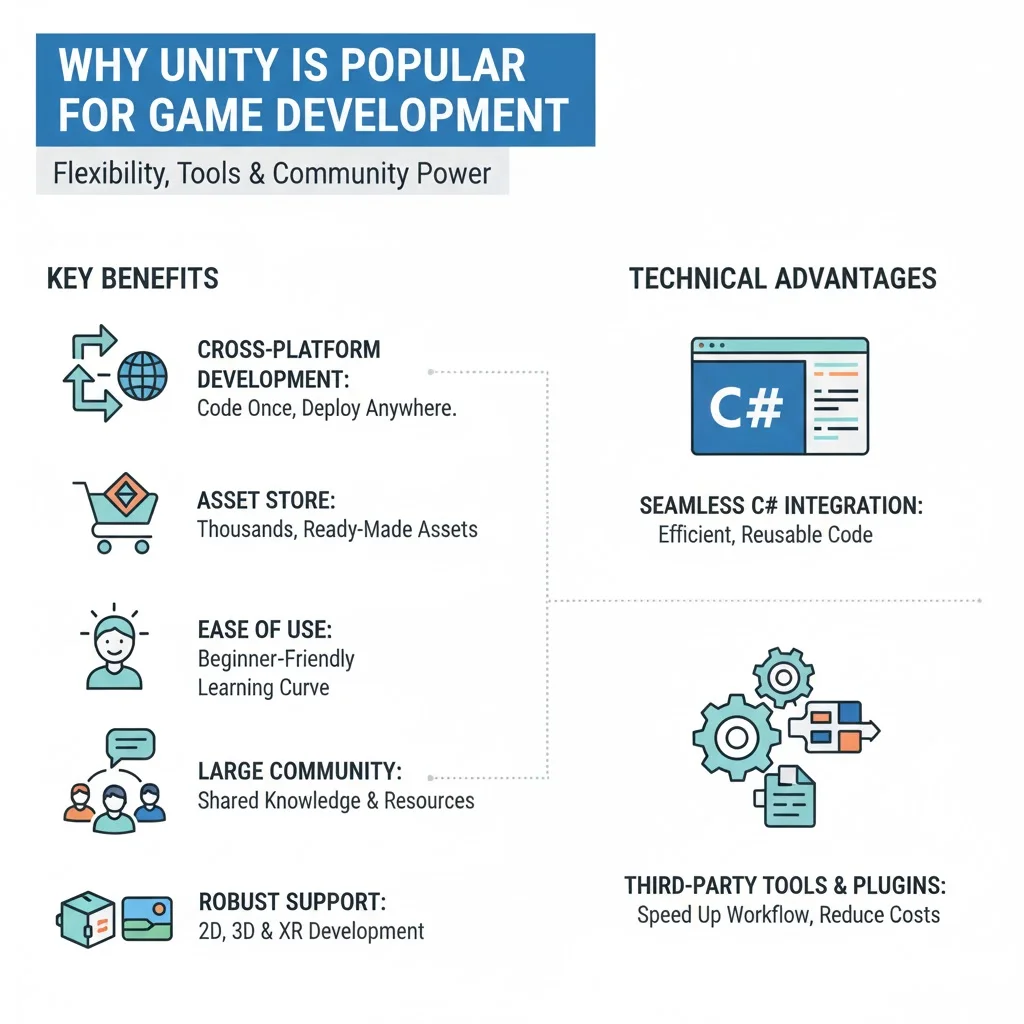
In 2026, Unity introduces more AI-driven tools, faster real-time rendering, and stronger support for Web3 and multiplayer frameworks. Whether you’re making a simple mobile game or a VR experience, Unity gives developers the technical base to build working games.
Estimate Your Unity Game Budget
Get a quick, personalized estimate for your Unity game project-based on your vision and target platforms.
Get a Free Cost EstimateWhy Knowing Development Costs Matters
Developing a Unity game in 2026 can cost between $5,000 and $500,000+, depending on scope. Since that’s a wide range, knowing what drives those costs helps you budget smartly and avoid problems during development.
Whether you’re a startup founder, an indie dev with a dream, or a business exploring gamification, knowing the costs can help you avoid underfunding, over-promising, or releasing an unfinished game that players criticize.
1. Cost Breakdown by Development Stages
Unity game development involves several stages, and each one carries its own costs. Understanding these phases helps you plan your budget more strategically.
| Development Stage | Key Activities | Estimated Cost (USD) |
|---|---|---|
| Pre-Production (Planning & Conceptualization) | Game Design Document (GDD), Market Research, Technical Planning, Concept Art | $2,000 – $10,000 |
| Game Design & Prototyping | Gameplay Prototypes, Mechanic Testing, Early Playable Demo Development | $5,000 – $20,000 |
| Coding & Programming | Core Gameplay Development, Backend Systems, Multiplayer Features, UI/UX Implementation | $10,000 – $200,000+ |
| Art, Animation & Asset Creation | Character Design, Environment Creation, UI Assets, Animations, Cutscenes | $10,000 – $100,000 |
| Testing & Quality Assurance (QA) | Manual Testing, Automated Testing, Bug Fixing, Beta Testing Feedback | $5,000 – $30,000 |
| Deployment & Launch | App Store Submission, Backend Deployment, Localization, Launch Marketing | $2,000 – $10,000 |
| Post-Launch Support & Updates | Hotfixes, Content Updates, Performance Improvements, Community Support | $10,000 – $100,000/year |
Talk to a Unity Cost Specialist
Book a free 15-minute consultation to discuss your game concept, scope, and ideal budget plan.
Book a Free Consultation2. Unity Personal (Free) License
Perfect for:
• Hobbyists
• Indie developers earning less than $100,000/year
Cost: Free
Limitations:
• Unity splash screen mandatory
• Limited cloud features
• No premium support
The Personal plan is excellent for prototyping, learning, and small mobile games. However, if you plan to scale into a serious commercial project, you’ll eventually need to upgrade.
3. Unity Plus Subscription
A step up from Personal, Unity Plus is designed for small studios or growing indie teams.
Cost in 2026: ~$400/year per seat
Benefits:
• Customizable splash screen
• Enhanced performance reporting
• Increased cloud storage and analytics
It’s a practical middle ground if your studio isn’t quite ready for Pro but needs more than what the free tier offers.
4. Unity Pro and Enterprise Licenses
| License | Annual Cost per Seat | Best For |
|---|---|---|
| Unity Pro | ~$2,040 | Mid-sized studios |
| Unity Enterprise | Custom Pricing | AAA studios, multi-team projects |
Created for professional studios and enterprises, these tiers deliver advanced capabilities and support.
Perks include:
• Source code access (Enterprise)
• Priority support
• More collaboration tools
• Advanced cloud diagnostics
These plans cost more, but they’re often needed for large teams, complex workflows, or major launches.
4.1 Additional Tools and Asset Store Purchases
Unity’s Asset Store can save development time by offering pre-built resources, but you’ll need to plan for its costs.
Common purchases:
• 3D model packs ($20–$500)
• UI kits ($10–$100)
• Complete game templates ($100–$1,000)
• Animation packs, shaders, plugins
Depending on your project’s needs, Asset Store expenses can range from $500 to $5,000 or more. For many teams, these resources save time and reduce production costs compared to building everything from scratch.
5. Cost Differences by Game Type
Not all Unity games carry the same price tag. Each genre and platform has unique requirements that directly impact development costs.
5.1 Casual Mobile Games
Simple gameplay, fewer features
• Lightweight assets
• Short dev cycles (2–4 months)
Average cost: $5,000 – $30,000
Ideal for first-time developers or for testing a concept before investing in a larger project.
5.2 Multiplayer Online Games
Multiplayer games demand more technical infrastructure, such as:
• Requires backend servers
• Real-time communication
• User authentication and matchmaking
Average cost: $100,000 – $500,000+
Keep in mind that ongoing expenses for server maintenance, updates, and anti-cheat systems will also factor into your budget.
5.3 AR/VR Games with Unity
Unity is one of the strongest engines for AR/VR, but the immersive experience requires higher investment:
• Requires expensive testing hardware
• Immersive 3D assets
• Haptic feedback and optimization
AR/VR cost range: $50,000 – $300,000
If you’re planning to build in XR, be prepared to budget for both development and hardware testing needs.
5.4 PC and Console Games
Developing for platforms like Steam, PlayStation, Xbox, or Nintendo Switch adds complexity. Expect costs for:
• Higher art fidelity
• Certification requirements
• Porting costs
Estimated cost: $100,000 – $1 million+
Console development kits and licensing alone can add thousands of dollars to your expenses.
5.5 Educational and Training Games
This category has grown in popularity across industries such as:
Popular with:
• Corporates
• Medical simulations
• Schools
Often involves:
• Precise simulations
• Custom inputs (e.g., VR controllers)
Cost range: $20,000 – $200,000 (depending on complexity)
If your goal is engagement with real-world learning or professional training, Unity’s flexibility makes it a cost-effective choice.
6. Development Team Structure and Pricing
A great game starts with a great team. The structure you choose-whether in-house, outsourced, or freelance-directly impacts both cost and workflow.
6.1 In-House Development Teams
Pros:
• Full control over the project
• Easier day-to-day communication
• Strong alignment with company culture
Cons:
• High salaries and overhead
• Employee benefits and long-term commitments
An in-house team of 5–10 developers can cost $200,000 – $600,000 per year or more, depending on location. This option is best if you want maximum control and plan to scale game development as part of your core business.
6.2 Outsourcing to a Unity Game Development Company
In 2026, many studios outsource to control costs while keeping quality high.
Pros:
• Lower project costs
• Established workflows
• Access to senior talent worldwide
Cons:
• Potential communication delays
• Time zone differences
Cost range: $30,000 – $250,000 per project, depending on the studio and region.
Outsourcing works well if you want to save time, tap into global expertise, and let professionals handle development while you handle business goals.
6.3 Freelance Unity Developers vs. Full-Service Studios
| Team Type | Cost | Best For |
|---|---|---|
| Freelancers | $20 – $100/hr | Indie games, prototypes |
| Agencies/Studios | $40 – $200/hr | Complete game development |
If you want to keep costs lean, freelancers are a smart option. However, for polished releases, larger projects, or AR/VR experiences, full-service studios usually provide better results.
6.4 Average Hourly Rates by Region (US, Europe, Asia)
| Region | Hourly Rate |
|---|---|
| US/Canada | $70 – $150 |
| UK/Germany/France | $60 – $120 |
| Eastern Europe | $30 – $60 |
| India/Philippines | $20 – $50 |
Global pricing varies significantly, so where your developers are located plays a major role in your overall budget. If you’re looking for balance, Eastern Europe and South Asia often deliver strong talent at competitive rates.
7. How Can the Unity Asset Store Reduce Costs?
The Unity Asset Store reduces development costs by providing ready-made assets, templates, and tools that save both time and money. Developers can use free and premium resources instead of building systems from scratch, allowing them to focus on unique gameplay features. For example, purchasing a tower defense template for about $100 can save months of development work and thousands of dollars in labor costs. Combined with selective outsourcing for custom art or audio, the Asset Store helps create high-quality, commercial-ready games faster and more affordably.
Free Unity Budget Checklist
Download our one-page checklist covering planning, development, QA, and post-launch cost stages.
Download the Checklist8.Timeline and Cost Correlation
Development time directly influences game development costs, as more complex projects require additional resources, testing, and ongoing support. While accelerating development may shorten timelines, it often increases expenses by requiring larger teams and can lead to technical debt or post-launch issues. Many successful indie studios reduce risk by launching a minimum viable product (MVP) first, validating demand before investing in additional content. For example, releasing a game with a single polished game mode allows developers to gather player feedback and generate early revenue, which can then fund future updates. This phased approach improves budget control, prevents unnecessary feature development, and increases the likelihood of building a sustainable, profitable game.
9. Strategies to Reduce Unity Game Development Cost
A common concern for developers is lowering expenses without losing quality. The answer lies in smart planning, efficient teamwork, and development strategies that focus on value.
10. Prioritizing MVP (Minimum Viable Product) Development
One of the most effective ways to reduce costs is by starting with an MVP. This is a simplified version of your game that:
• Delivers core gameplay
• Runs smoothly without major bugs
• Demonstrates real value to players
By focusing on the essentials first, you can launch faster and test market response before investing heavily in extra features. Expansions, cosmetic items, or additional levels can always be added later once you know the game resonates with your audience.
10.1 Efficient Team Collaboration Tools
Good communication saves both time and money. Tools like Trello or Notion streamline task tracking, Slack and Discord keep team communication flowing, and platforms like GitHub or Unity Collaborate simplify version control.
When your team works efficiently, you reduce unnecessary rework, avoid delays, and keep your budget on track.
10.2 Iterative Development and Agile Methods
Traditional “waterfall” approaches often lead to wasted effort. Agile methods encourage flexibility and fast feedback. This includes:
• Development sprints with clear milestones
• Regular player feedback loops
• Frequent playable builds for testing
This approach prevents you from building features that players don’t need, while helping you manage scope and costs more effectively.
11. Real-World Cost Examples of Unity Games
Understanding real-world examples helps put Unity development costs into perspective. These case studies illustrate how budgets, timelines, and outcomes vary depending on team size and project scope.
11.1 Indie Game Cost Example
A small indie team created a 2D roguelike using the Unity Personal license. They combined free assets with about $1,500 in paid art and hired two freelancers to handle coding and audio.
Final budget: Around $18,000
Development time: 5 months
Launch platform: Steam
Revenue (first 6 months): $45,000+
This example shows how even a lean budget can produce profitable results if the core gameplay is engaging.
11.2 Mid-Sized Game Studio Project
A team of eight developers built a mobile RPG with Unity Pro. The project included fully custom assets, detailed 3D environments, and monetization features such as in-app purchases and ads. QA testing was outsourced to ensure a smooth launch.
Budget: About $150,000
Development time: 12 months
Revenue (first year): $300,000+
For mid-sized teams, the investment is larger, but so is the revenue potential-especially when monetization systems are planned effectively.
11.3 AAA-Level Game Development with Unity
Unity is not limited to indie or mobile games. A AAA studio developed a cross-platform strategy game using Unity Enterprise. The project involved over 40 full-time staff, a custom backend, and advanced multiplayer functionality.
Cost: $1.2 million+
Development time: 2 years
Revenue (first year): $6 million
This demonstrates how Unity can scale to enterprise-level projects with significant returns, provided the budget and team resources match the vision.
12. Unity Game Maintenance and Update Costs
Many developers underestimate post-launch expenses, but ongoing maintenance and hidden costs can significantly impact a Unity game's profitability. Beyond initial development, teams must budget for bug fixes, content updates, server infrastructure, third-party services, marketing, and monetization systems. Regular patches are essential for resolving crashes, gameplay issues, and device compatibility problems, while new levels, features, and DLC help retain players and generate additional revenue. Multiplayer games also require scalable server solutions, with costs increasing as the player base grows. In addition, services such as analytics, leaderboards, payment gateways, and cloud storage often start with free tiers but become more expensive at scale. Marketing remains another major expense, as even high-quality games need visibility through ASO, influencer campaigns, and paid advertising. A common mistake among indie developers is budgeting only for launch while overlooking long-term operational costs. Planning for maintenance, growth, and player acquisition from the start helps prevent unexpected expenses and supports sustainable success after release.
For example, a multiplayer Unity game with 5,000 monthly active users may spend $500–$2,000 per month on hosting, while games with 50,000+ users can exceed $10,000 per month depending on infrastructure and real-time networking requirements.
Many indie studios discover that server and support costs exceed initial projections after a successful launch, making post-launch budgeting as important as development budgeting.
13. Cost Considerations for AR/VR Game Development with Unity
Unity has become the leading engine for AR and VR development thanks to its robust XR toolkit, cross-platform compatibility, and support for all major headsets. But AR/VR game development carries additional costs beyond traditional 2D or 3D projects. Testing requirements, specialized hardware, and immersive design elements all contribute to the final budget.
Whether you’re creating a VR rhythm game or an AR-powered training application, here are the key cost factors to consider.
13.1 VR Hardware Compatibility and Testing
VR games typically need to support multiple devices, not just one. Popular headsets include Meta Quest (2, 3, Pro), HTC Vive, Valve Index, PlayStation VR2, and Pico Neo. Each comes with different controller systems, performance requirements, and field-of-view specifications.
Unity’s XR Interaction Toolkit helps unify code across devices, but you’ll still need dedicated testing for each platform.
Estimated testing and equipment costs:
• Meta Quest 3: $500 – $650
• Valve Index Kit: ~$1,000
• PlayStation VR2: $550 (plus the cost of a PlayStation 5)
• High-end development PC: $1,500+
• Cross-platform QA and hardware testing: $3,000 – $10,000+
Key consideration: VR testing goes beyond fixing bugs. Comfort, frame rate, and motion sickness are critical factors that directly affect player experience.
13.2 AR Frameworks and Integration Costs
AR is expanding quickly in mobile gaming, enterprise solutions, and education. Unity supports major AR SDKs such as AR Foundation, ARKit, ARCore, Vuforia, and 8thWall. While AR Foundation is free and built into Unity, others require paid licenses or significant development time for integration.
Typical costs include:
• ARKit/ARCore integration: $3,000 – $10,000 in development time
• Vuforia license: $499/year per app
• Asset bundles (3D models, UI): $500 – $5,000
• Custom shaders and effects: $1,000 – $10,000+
AR projects also face unique challenges like managing battery drain, optimizing real-world spatial mapping, and handling device-specific camera permissions.
Insight: Unity simplifies cross-platform AR development, but you’ll still need to allocate extra time and budget for device optimization.
13.3 Immersive Experience Development Expenses
AR/VR games require a deeper focus on immersion than traditional titles. Players can look anywhere in a 360° environment, which means every angle must feel complete and believable. Additional features like motion controls, haptic feedback, spatial audio, and natural voice input add to both complexity and cost.
Estimated development costs:
• 3D immersive environment design: $10,000 – $100,000+
• Motion controller integration: $3,000 – $15,000
• Spatial audio setup: $2,000 – $20,000
• User testing (VR/AR focus groups): $5,000 – $30,000
• Comfort and FPS optimization: $5,000 – $25,000
A prime example is Beat Saber, developed in Unity. Its success wasn’t just about gameplay-it came from polished UX, precise motion tracking, and optimization across multiple platforms. Investments in polish directly translated into millions in revenue.
Pro Tip: In AR/VR, even small issues like UI glitches or frame drops can break immersion and make the experience feel unfinished.
Unity Budgeting Mistake Matrix
| Mistake | Impact | How to Avoid |
|---|---|---|
| No QA budget | Broken game at launch | Budget for QA from alpha |
| Skipping post-launch planning | Game dies quickly | Plan 3–6 months of support |
| Over-scoping MVP | Burnout, delays, missed deadlines | Stick to the core loop first |
| No server scaling plan | Crashes on day 1 | Load test & plan scalable hosting |
| Underestimating tool/license costs | Surprise bills | Track Unity Pro, assets, SDK fees |
A realistic budget isn’t about spending the least, but about putting money into the areas that give your game the best chance of success. Plan for QA, post-launch support, and scalable growth from day one, and your Unity project will have the foundation it needs to succeed.
Maintenance and Update Costs
Many developers underestimate post-launch expenses, but ongoing maintenance and hidden costs can significantly impact a Unity game's profitability. Beyond initial development, teams must budget for bug fixes, content updates, server infrastructure, third-party services, marketing, and monetization systems. Regular patches are essential for resolving crashes, gameplay issues, and device compatibility problems, while new levels, features, and DLC help retain players and generate additional revenue. Multiplayer games also require scalable server solutions, with costs increasing as the player base grows. In addition, services such as analytics, leaderboards, payment gateways, and cloud storage often start with free tiers but become more expensive at scale. Marketing remains another major expense, as even high-quality games need visibility through ASO, influencer campaigns, and paid advertising. A common mistake among indie developers is budgeting only for launch while overlooking long-term operational costs. Planning for maintenance, growth, and player acquisition from the start helps prevent unexpected expenses and supports sustainable success after release.
For example, a multiplayer Unity game with 5,000 monthly active users may spend $500–$2,000 per month on hosting, while games with 50,000+ users can exceed $10,000 per month depending on infrastructure and real-time networking requirements.
Many indie studios discover that server and support costs exceed initial projections after a successful launch, making post-launch budgeting as important as development budgeting.

Imroz Mansuri
Founder


